Internet Chess: Death by Logical Failure
- The Medium is the Problem
To play online chess, you must use a computer. The computer is the terminal for accessing the game, transmitting moves, and communicating with others. - The Definitional Contradiction
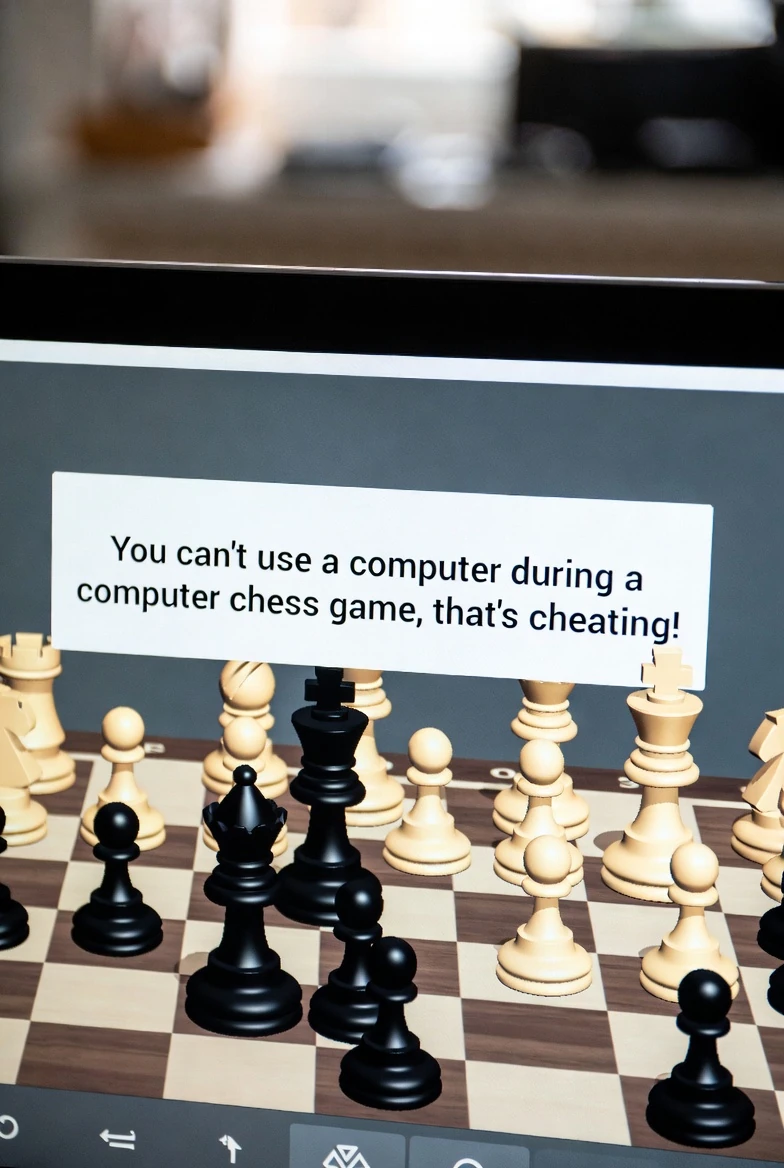
The platform’s rule states: You must use a computer to play, but you must not use a computer to assist your play.
This creates a paradoxical prohibition: Do not use a computer while using a computer. - The Technological Indistinguishability
The same device that provides access to the game is also capable of providing chess engine assistance, opening databases, team input, or remote help—all within the same physical and digital environment. - The Enforcement Fallacy
The only way to police whether a player is using a computer (for assistance) while using a computer (for access) is through other computers (server‑side detection algorithms). This creates a self‑referential, circular system of judgment—computers judging computers, with no pure “human” layer. - The Inevitable Outcome
Because the system cannot truly differentiate between exceptional human skill and machine assistance without relying on the very technology it polices, it defaults to statistical norms and player reports.
Exceptional players are flagged as anomalous and removed—not because they cheat, but because they break the model. - Conclusion
The system itself is built on a fallacy that confuses medium with agency, and excellence with fraud.
In short:
Online chess platforms forbid “computer assistance” while requiring computer use—a logical contradiction that turns the medium into both the necessary tool and the suspected crime. Enforcement becomes digital circular reasoning.